Project
Project Starling
Location:
Workington, UK
Project Status:
In progress (FEED phase)
Statistics:
31,000 tonnes/annum eSAF
Technology:
SOEC + Fischer-Tropsch
Target operation date:
2031
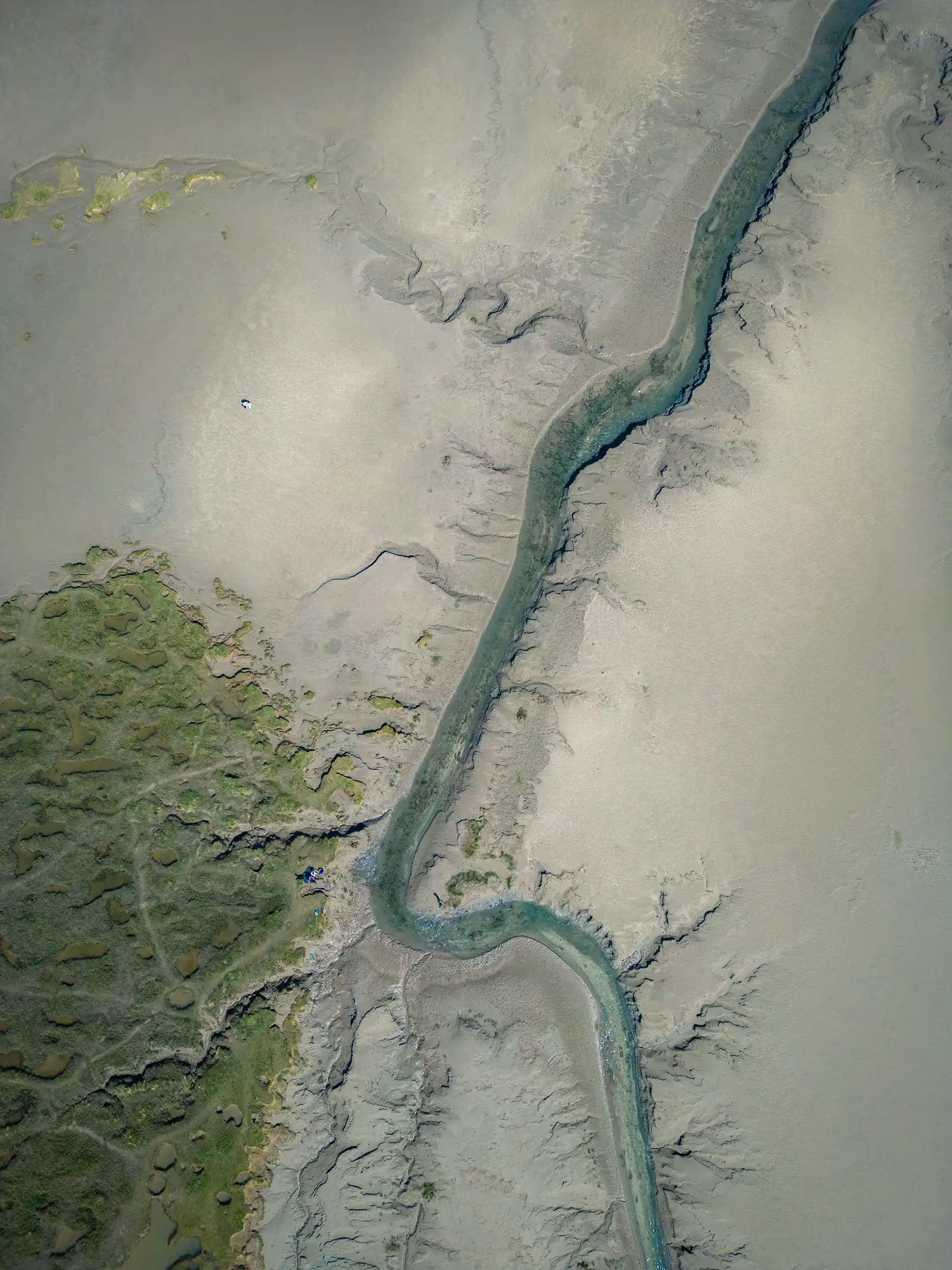
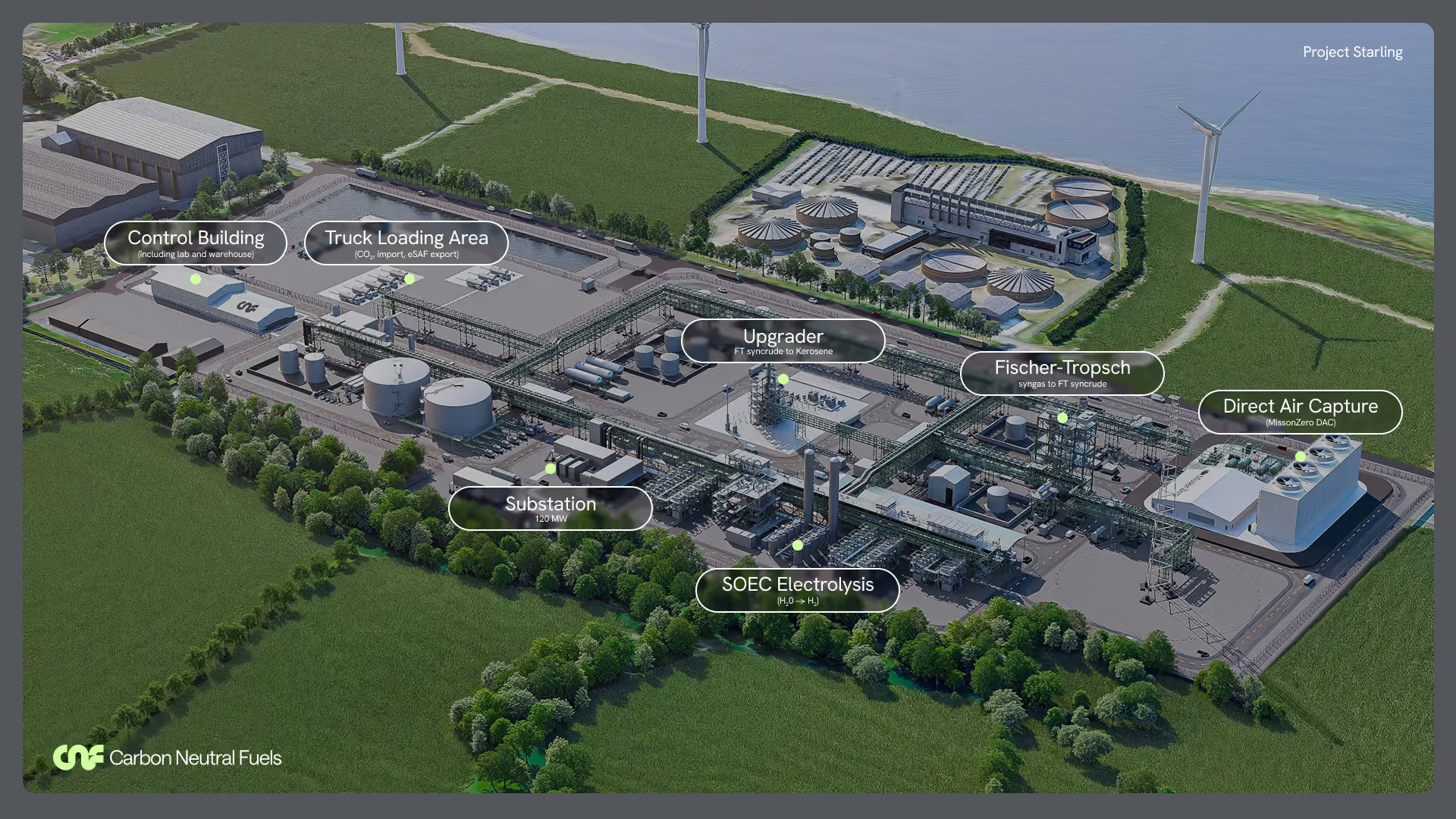
Part-funded by the UK Government Advanced Fuels Fund, this First of its Kind Power-to-Liquid facility will have the capability to deliver 31,000 tonnes of Sustainable Aviation Fuel annually.
We produce long-chain hydrocarbons using just air, water, and low-carbon electricity - fuels that can power aviation and other sectors without relying on fossil resources. By capturing CO₂ and combining it with green hydrogen produced from low-carbon electricity, we create synthetic fuels that can dramatically reduce lifecycle carbon emissions compared to conventional Jet A-1 kerosene.
Feasibility
Feasibility
Pre-FEED
Pre-FEED
2027
2027
FEED
FEED
2029
2029
Construction
Construction
2031
2031
Facility Online
Facility Online
“Our vision for Carbon Neutral Fuels is to prove that decarbonising flight is both possible and essential. This Government funding will help us deliver a facility that significantly reduces the aviation industry’s overall carbon footprint and indeed reshapes what’s possible for future fuels.”
Sophie Zienkiewicz
Co-Founder, Carbon Neutral Fuels
Not only will this project bring long term social and economic benefits to local communities and the wider UK, it will also boost domestic supply chains, and drive the development of cutting edge decarbonisation technologies. We are making incredible progress. This project is currently in the Front-End-Loading design process, led by our partner, io consulting. We have a successfully completed FEL3A and are still in the longer FEED engineering phase of the project, with an expected date of project completion of 2031.
What investment have you raised to date?
We have raised £7.4m in grant funding and over £3.5m in private funding
Are you currently fundraising?
We have commenced our Series A raise. Please get in touch to hear more about the investment opportunity.
What about hydrogen and electric flight as alternative solutions?
Kerosene is incredibly energy dense, whilst batteries and hydrogen are much less so. Sustainable Aviation Fuel is viewed as the most viable solution for addressing carbon emissions in the aviation sector.
Are clean fuels more expensive than fossil fuels?
As with any new technology, initial costs are expected to drop significantly as technologies mature and are deployed at scale, such as in our Project Starling and Project Kestrel facilities.
How does synthetic SAF compare to other Sustainable Aviation Fuels (like HEFA/biofuels) for long-term investment?
Biofuels are limited by feedstock (limited supply of waste oils, energy crops compete with food crops). Synthetic SAF uses only CO2, water, and renewable energy, making it infinitely more scalable. Governments recognise this, which is why the UK synthetic SAF mandate and ReFuelEU support a growing PtL industry
What makes Carbon Neutral Fuels a leading synthetic fuels investment opportunity in the UK?
CNF was the recipient of the largest grant awarded to a synthetic fuels company in Window 3 of the Department for Transport's Advanced Fuels Fund, and has raised over £11 million so far. We are also the most mature UK synthetic SAF project, with a credible path to FID in Q2 2028 for our flagship facility, which will supply 50% of the PtL submandate in 2031.
How can clean fuels help us meet our net-zero commitments?
Fuels are drop-in compatible with existing aircraft and infrastructure, making them one of the most scalable ways to decarbonise aviation. When produced using captured CO₂ and green hydrogen, they can reduce lifecycle emissions by over 90% (or in our case over 95%).
Is your fuel certified for use in commercial aviation?
Our fuels are being developed to meet international ASTM D7566 certification standards. We are working with technology licensors and partners to ensure full compliance for commercial blending and use.
How soon will clean fuels be available at scale?
We are targeting first production in 2031 from our flagship Project Starling project in the UK. We are actively engaging with airlines now to shape long-term offtake agreements and joint development opportunities.
How can we partner with you?
We are seeking forward-leaning airline partners to collaborate on offtake, co-development, and advocacy. Please get in touch to explore how we can align our sustainability strategies.
Can synthetic fuels be used in existing infrastructure and supply chains?
Yes – our synthetic fuels will meet ASTM D7566 and are designed to be blended with fossil Jet A-1 in concentrations up to 50%
What volumes will be available, and when?
Our first commercial plant aims to produce 31,000 tonnes per year of synthetic blending component (SBC) in 2031. That’s enough to meet 45% of the UK’s PtL submandate that year. We are actively discussing long-term supply arrangements with aviation and industrial buyers.
How are prices expected to evolve over time?
Synthetic fuels are currently more expensive than fossil fuels, but costs are expected to fall rapidly as production scales and supportive policy frameworks mature across the UK and EU.
How can we secure a future supply of your synthetic fuels?
We are engaging now with early buyers to establish offtake agreements that support project bankability and long-term supply security. Reach out to discuss commercial terms and collaboration.
Whose technologies does Starling incorporate?
The Starling stack offers innovation through integration, not novel components, bringing together Tier-1 licensors at a high Technology Readiness Level (TRL) across electrolysis, FT synthesis, and upgrading technologies in modular designs. Our vendors include Honeywell UoP, Johnson-Matthey, and Topsoe.
What efficiencies and optimisation does Starling utilise?
We’re proud of Starling’s innovative design, in which excess heat from the Fisher-Tropsch reactor raises steam for the Solid Oxide Electrolysis (SOEC) electrolysers, significantly reducing energy consumption. This operates at over 600°C, and is 20-30% more efficient than PEM/Alkaline electrolysis when combined with a source of waste heat. Naphtha and tail gas are then recycled back to syngas to increase yield.
What are Starling’s feedstocks?
We’re currently the only UK undertaking to announce the use of both biogenic and Direct Air Capture (DAC) carbon sources from 'day one' on a commercial plant. We’re utilising 100% domestic UK feedstock (meaning zero import dependency or geopolitical exposure), and have a primary supply for our biogenic carbon under signed MOU with pricing agreed. This supply-route supports rural industries like farms and distilleries. Water is sourced from an industrial supply network (not drinking water) protecting local water resources. Future phases will use recycled wastewater from the local treatment works, subject to regulatory approval. Recycled waste water is consistently available, increasing the reliability of Project Starling. Positions Workington and the North West as a model for integrated, low-carbon industry, increasing export potential and regional reputation.
Project partners

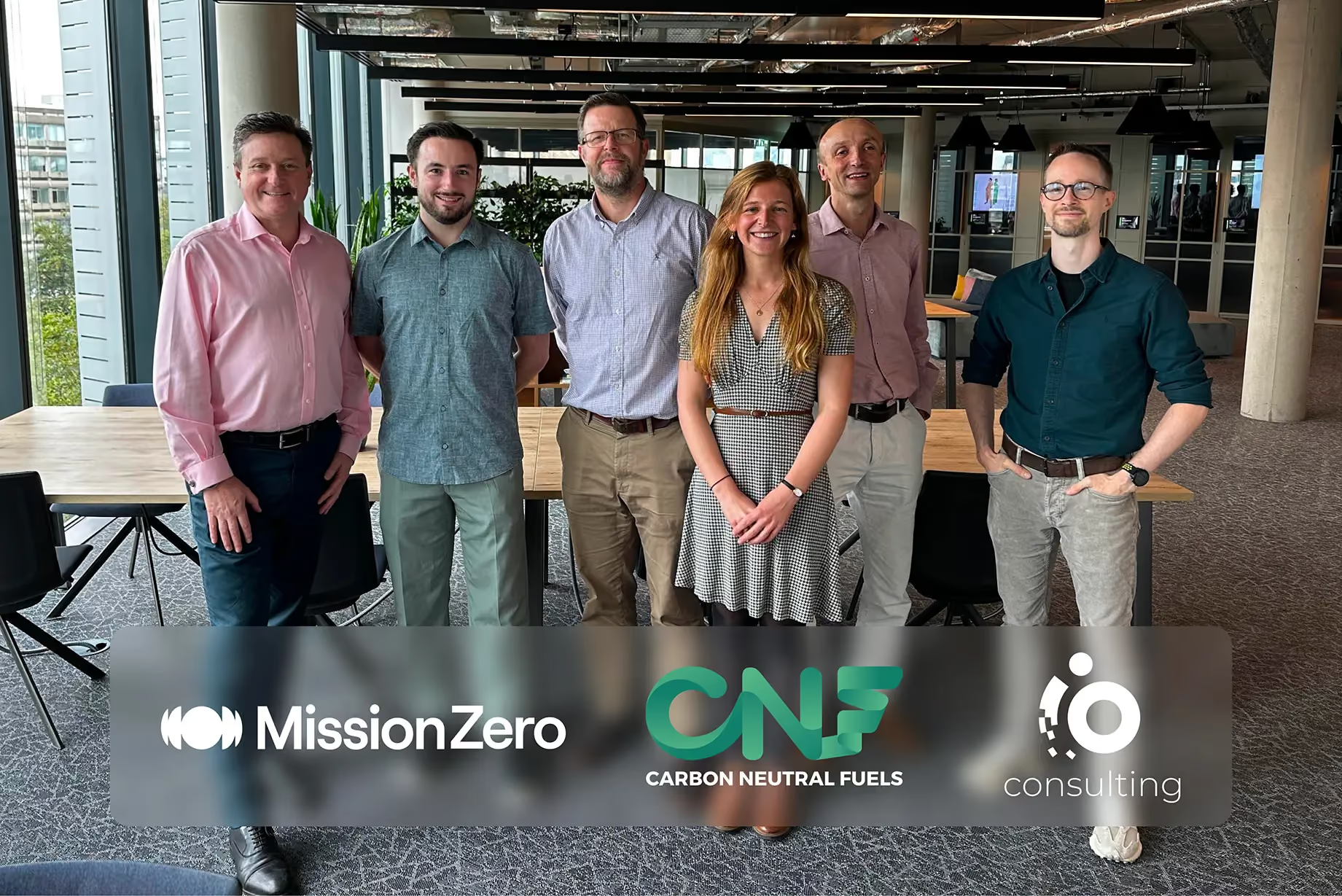
io consulting is a project architect and systems integrator formed as a joint-venture between McDermott and Baker Hughes. io work in the early stages of energy and hydrocarbon development projects, combining technical and economic know-how to give a high degree of certainty that project objectives can be delivered.
MissionZero is reinventing carbon for a thriving planet. Since 2020, the team has rapidly pioneered versatile Direct Air Capture (DAC) technology to remove historic CO₂ emissions from the atmosphere — anywhere, at any scale. Supported by Breakthrough Energy Ventures, the XPRIZE Foundation, Stripe, and the UK government, MissionZero has moved a brand new climate technology from lab to commercial plants in under three years to rapidly empower carbon removal and utilisation pathways.

Trailfinders is a leading British travel brand who join as an investor in Carbon Neutral Fuels. As global explorers who enable others to discover the world, Trailfinders are making a firm commitment to more sustainable travel which reflects their progressive and pioneering approach.
Stay up to date
Be first to hear about breakthrough projects
Project Starling is just the beginning. As we pioneer solutions that remove CO₂ from the atmosphere and accelerate the transition to sustainable energy, we want you with us every step of the way. Sign up to receive updates on this project and future innovations.
Related news